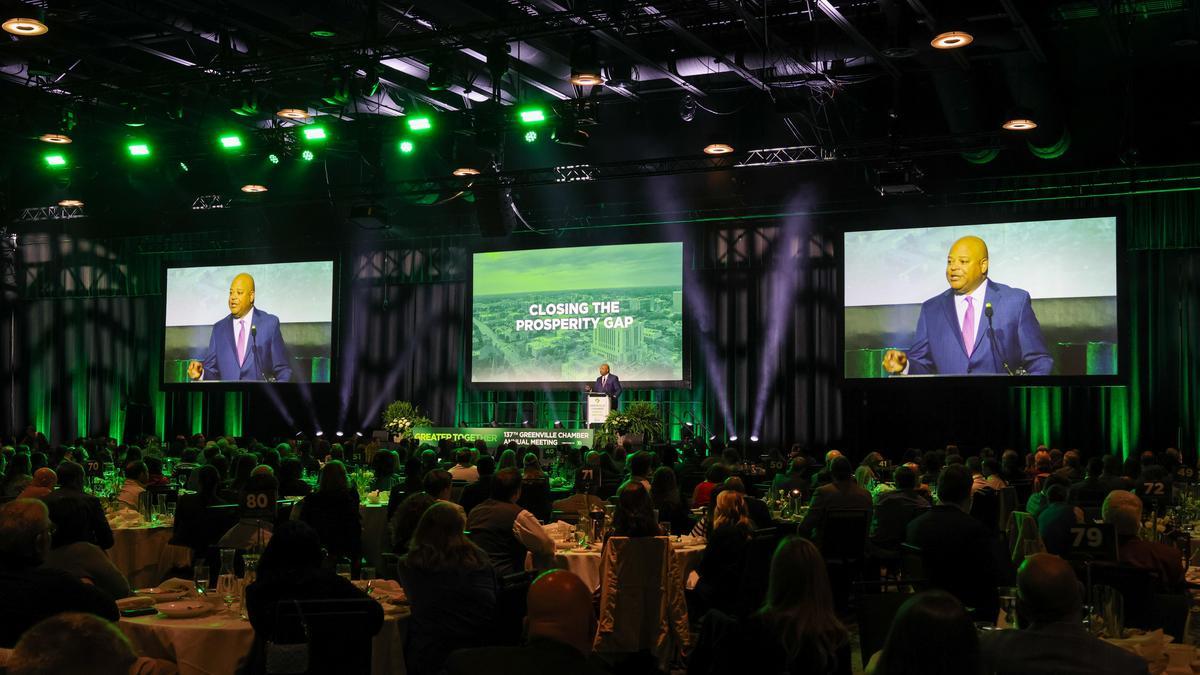
By Carlos Phillips, President & CEO, Greenville Chamber of Commerce
Greenville County has built a remarkable story of progress. We’ve evolved from our textile roots into a nationally-recognized leader in advanced manufacturing, healthcare, and innovation. Our skyline, quality of life and growing reputation reflect a community that relentlessly strives for what’s next.
Yet one measure reminds us that our work isn’t finished. In 2024, Greenville County’s per capita personal income (PCPI) stood at 87.6% of the national average, a gap that represents over $5 billion in unrealized economic activity that year alone and more than $50 billion lost over the past two decades.
Those are dollars that didn’t flow into local businesses, family savings, or community investments in housing, education, and infrastructure. Imagine what Greenville could accomplish if we closed that gap by 2035, the businesses we could grow, the communities we could strengthen and the opportunities we could create for every resident.
Greenville’s growth story is powerful, but prosperity hasn’t reached everyone equally. Several challenges drive this income gap:
- Skills mismatch. Many workers are in lower-wage jobs, while high-demand sectors like engineering, health care and technology continue to face labor shortages.
- Education gaps. Our postsecondary attainment lags many peer cities, even though each additional credential leads to stronger wages and stability.
- Rising costs and limited access. Housing and transportation challenges make it harder for many families to connect with opportunity.
At the same time, Greenville’s small-business community is thriving but concentrated in lower-margin industries. Expanding locally-owned firms in high-value sectors will be a critical driver of future growth.
Closing this gap touches everyone. It means better jobs and stability for families, stronger local businesses, and more resources for the infrastructure and public services that sustain our success.
Reaching national parity by 2035 is ambitious but achievable if we stay focused on three priorities:
- Build a stronger talent pipeline through education, apprenticeships and adult reskilling.
- Fuel local business growth by expanding capital access, mentorship and local supply chain opportunities.
- Make prosperity reachable for all by addressing housing, childccare and transportation barriers.
Greenville has reinvented itself before, turning the loss of textile jobs into a decades-long success story of innovation and resiliency. Now it’s time for the next transformation: raising incomes, expanding opportunity and ensuring prosperity truly reaches everyone.
The Chamber looks forward to working with business, education, government and community partners to create meaningful progress. Together, we can turn billions in unrealized potential into shared prosperity. We’ve done it before and we must do it again.
Carlos Phillips is in his 10th year as president and CEO of the Greenville Chamber.