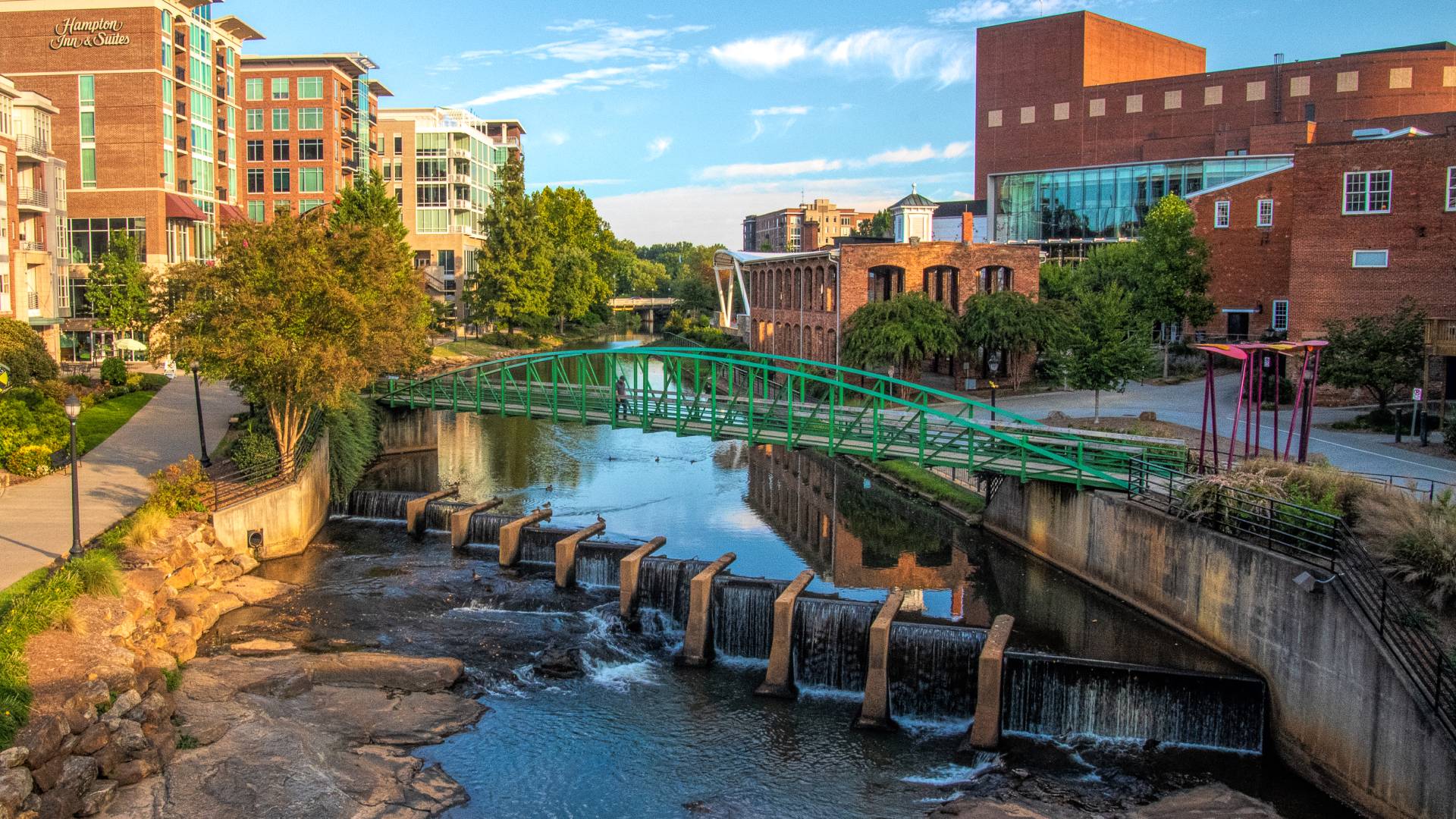
The city of Greenville has updated its downtown design guidelines.
These guidelines are used to manage the design, character and function of downtown Greenville as it continues to grow and evolve. New projects in the city’s downtown design district must comply with the standards outlined in the document, which cover everything from building massing to architectural detailing.
The first draft of the updated downtown design guidelines was presented during the city’s project preview meeting on May 26. Community members are invited to review and provide feedback on the draft guidelines on the city’s project website. The guidelines were last updated in 2017. The existing guidelines prioritize enhancing walkability, green space and pedestrian activation in downtown Greenville.
The adoption of the Greenville Development Code in 2023 expanded the boundary of the city’s downtown design district, bringing in new neighborhoods, districts and zoning types. The expansion required the city to update its guidelines.
City staff started working on the downtown design guidelines update in May 2025 with consultants from Cooper Carry and ADP Urban Planning and Development. Edward Kinney, a principal landscape architect with the city, said the updated guidelines incorporate most of what was already in place, with a few additions.
For example, the draft guidelines outline four specific character districts found within the general downtown area of Greenville. Each district has unique design priorities and standards to ensure new development reinforces the area’s existing characteristics.
“We wanted to find tools that would help guide design to address the unique areas of downtown,” said Allison Bickers with Cooper Carry.
The Halprin District incorporates the area on the north end of downtown Greenville. It is named for Lawrence Halprin, who redesigned Greenville’s Main Street between College and Broad streets in the 1970s. The draft guidelines prioritize preserving the district’s historic and natural features while strengthening the retail storefront experience.
The proposed boundaries of the West End District stretch from South Academy Street down to the intersection of Augusta and Dunbar. Priorities outlined in the draft guidelines include protecting the district’s historic commercial character and public spaces while welcoming adaptive reuse and appropriate infill development.
The Unity Park District focuses on the area surrounding the city’s 60-acre park, including Mayberry Street, South Hudson Street and Welborn Street. Some of the proposed priorities for the character district include promoting park-centered architectural designs, strong pedestrian infrastructure, flood mitigation and expanded tree canopy.
The final character district contains the Village of West Greenville and the Pendleton Street corridor. The draft guidelines focus on maintaining the district’s artistic character, promoting mixed-use growth and adding gathering spaces.
The updated downtown design guidelines also include a new section for residential projects that fall within the expanded downtown design district boundary. Specific design standards have been created for four residential building types:
- Small-scale multi-family housing
- Single-family detached housing
- Single-family attached housing
- Existing single-family housing
Following the project preview meeting, the city’s consultants will analyze the collected public feedback to finalize the draft downtown design guidelines. The Design Review Board is tentatively scheduled to review the updated guidelines in August. The guidelines will also need to be reviewed and approved by the city’s Planning Commission and Greenville City Council for final adoption.
For more information on the city’s downtown design guidelines and to submit online feedback, visit greenvillesc.gov/2676/Downtown-Design-Guidelines.
Design principles
The first draft of the updated downtown design guidelines includes a revised list of design principles. These principles reflect the city’s vision for the continued development of downtown Greenville.
- Contextual fit
- Design quality
- Human scale
- Variety and adaptability
- Pedestrian priority
- Green infrastructure
- Strengthen connectivity
- Comfort and activation